
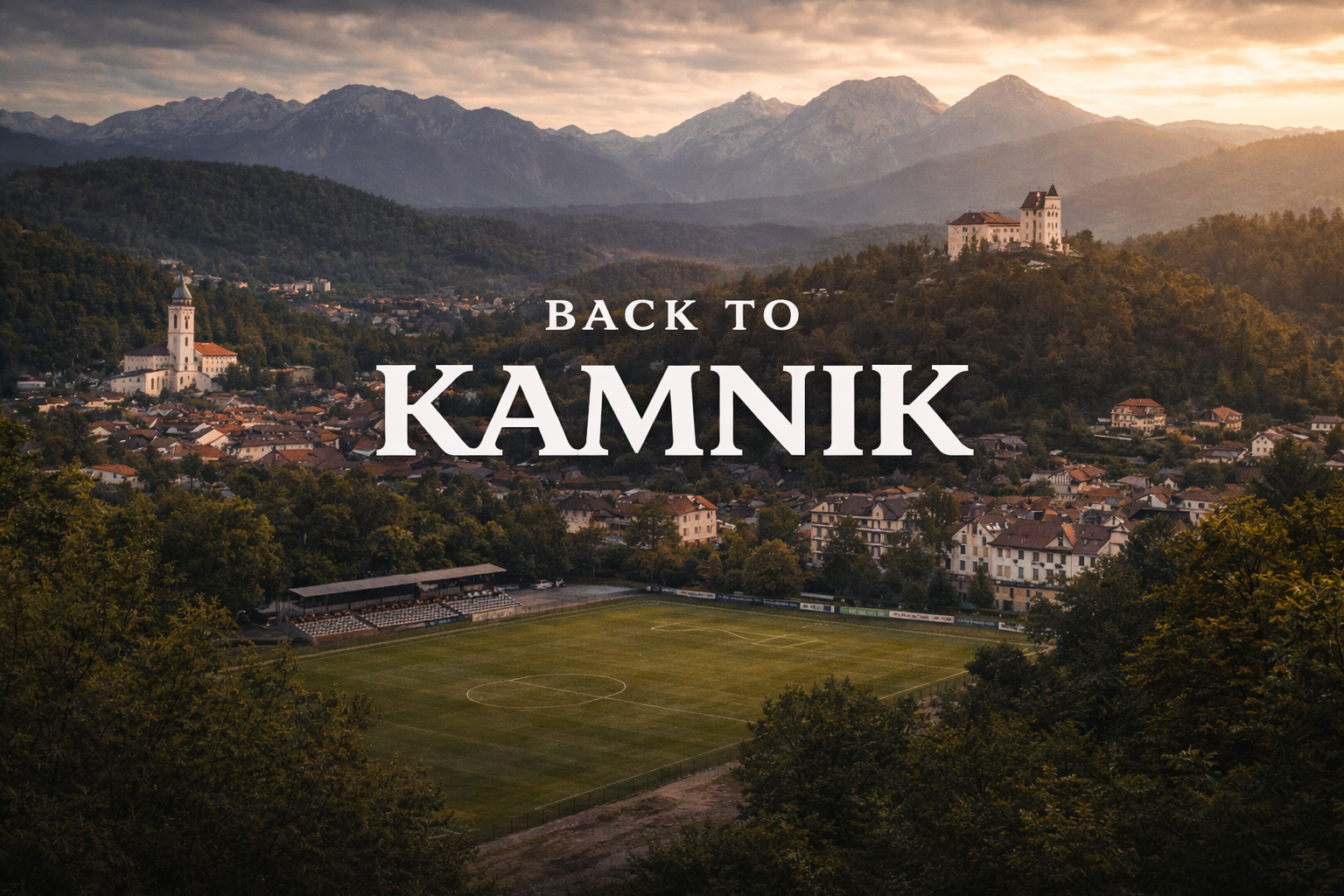
Goals for the documentary
This documentary exists because stories like this usually go unnoticed.
NK Kamnik is not a famous club. There are no cameras waiting for them, no built-in audience, and no guarantee that anyone outside the town will ever hear what they are going through. But that is exactly why it matters. This is where football feels the most real, where it is tied to identity, routine, and community in a way that is easy to overlook.
The goal of filming is to capture that reality as it unfolds. Not just the matches, but everything around them. Training sessions, conversations, setbacks, small wins, and the day to day effort it takes to keep a club going after something like the fire. It is about showing what rebuilding actually looks like, without trying to clean it up or turn it into something it is not.
At the same time, this is a personal process. Going back to Kamnik is not just about documenting the club, but about reconnecting with a place that has always been part of my background. The film sits in that space between observation and involvement, where the story is both something being captured and something being experienced.
The people this is meant to reach are not just football fans. It is for anyone who understands what it means for something small to matter. People who care about local communities, about preserving identity, and about the kind of stories that do not usually get told.
If it works, the film will do more than document a season. It will create a connection between the club and a wider audience, and give people a reason to care about what happens next.